
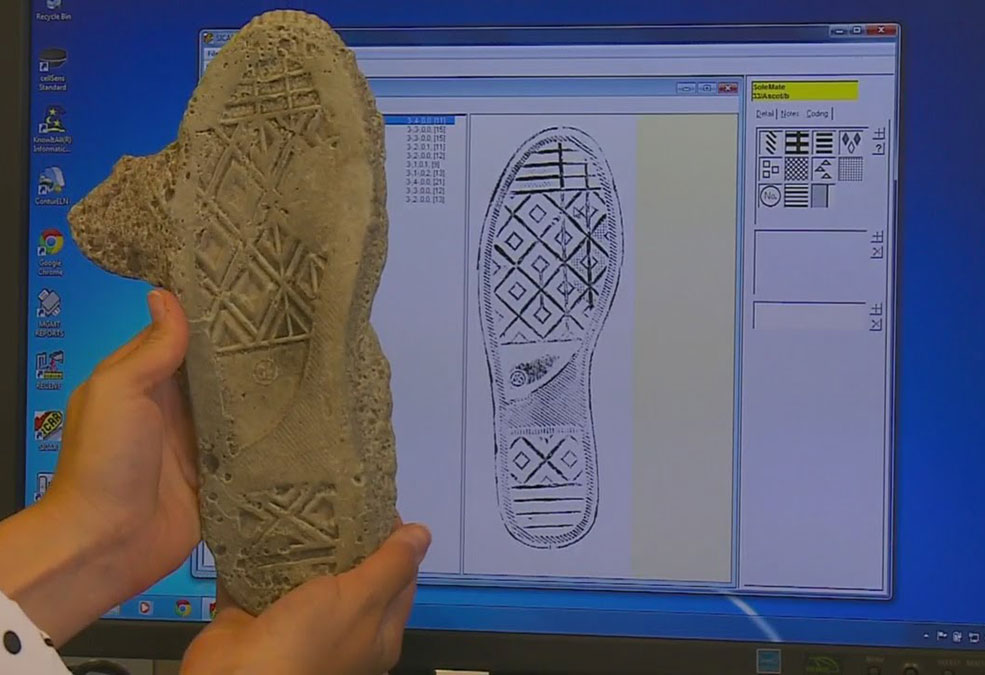
In the world of forensic science, even the shoes we wear can provide important clues to assist solve crimes. The analysis of shoe brands, sizes, and styles found in footprints and impressions is a critical component of criminal investigations, frequently generating major leads that lead directly to the culprits.
Shoe print evidence has been crucial in countless cases, demonstrating how footwear can become an important piece of the investigative puzzle. Each shoe contains distinguishing characteristics, including tread patterns, wear markings, and manufacturing details, that can be linked to specific brands and styles. This specificity helps forensic investigators to dramatically narrow their search for suspects.
One significant instance in which shoe print analysis was critical is the arrest of Dennis Rader, the infamous “BTK” killer. Investigators discovered a shoe print at one of the crime locations that corresponded to a certain style of sneakers. Investigators were able to construct a list of suspects after tracing sales data and narrowing down prospective owners of that specific shoe model. Although it took years to apprehend Rader, the shoe print evidence was a critical component in the complex puzzle that led to his arrest.
In another case, shoe print analysis was used to link a spate of burglaries in a neighbourhood. The distinctive tread pattern of a rare brand of work boot found at several crime scenes helped authorities identify a common suspect. When police captured the defendant, they discovered the identical boots in his possession, which directly linked him to the murders and led to his conviction.
To evaluate shoe prints, forensic professionals first photograph and cast imprints obtained at crime scenes. These imprints are then matched to databases containing known shoe tread patterns. Detailed exams look at the size, depth, and specific wear marks that can reveal a person’s gait or weight distribution. This detailed study can also identify the wearer’s estimated height and weight, offering more information to help limit down candidates.
Shoe prints might also reveal information about the act itself. For example, the presence of various shoe prints can reveal the number of people involved, as well as their movements and actions throughout the crime. In some cases, shoe prints have indicated attempts to fabricate the crime scene or mislead police, adding another layer of mystery to the inquiry.
Fashion trends also influence forensic investigations. Certain brands and styles gain popularity in various regions or among specific groups, offering further background for investigators. For example, the frequency of a specific brand of shoe in a community might assist limit down suspect lists and focus the investigation on potential suspects.
To summarise, forensic research of shoe brands and styles is an intriguing combination of fashion and science. By investigating the distinctive qualities of footwear, forensic professionals can unearth vital evidence that leads to the settlement of complex cases. This novel method of crime solving reveals how even minor information, such as the shoes on our feet, can have a huge impact in the quest of justice.